

The Bible, Astrology and Who decides What is True
This article does not attempt historical revisionism. It offers information that may help you understand what happens in a society when rulers or experts hold absolute authority, and how that authority reaches into your free will by limiting your access to information. The same free will they proclaim to defend is the free will they exercise over you: over what you may read, what you may think, and what you may say.
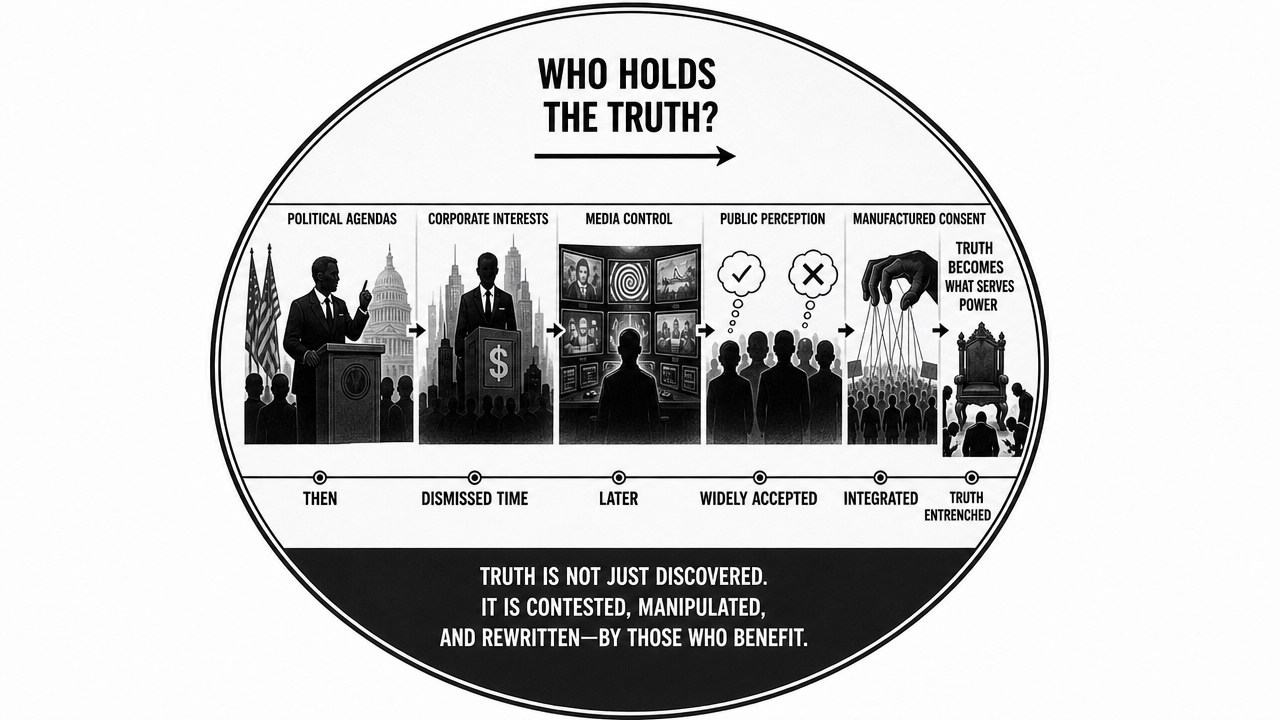
The question is not whether who was right or wrong. The question is older and simpler than that. In any given century, somebody holds the power to declare what counts as knowledge and what counts as superstition. That power has changed hands several times. The problems that come with it have not changed at all.
Our subject is astrology, and our starting point is the Bible, the book followed by billions of people today. Not only the Catholic Church, but every denomination that uses the whole Bible or only the New Testament. Even denominations that do not recognize the Pope in Rome as a religious authority still follow rules laid down by the Catholic Church in the fifteenth and sixteenth centuries, often without knowing where those rules came from.
It is good practice to examine the origin of your beliefs. In doing so, you are only exercising your free will.
Controlling the Book
For centuries the Catholic Church was ruler and law, not only in spiritual matters but in everything that existed. The first thing an authority of that kind protects is not the truth. It is access to the truth.
John Wycliffe was a respected Oxford theologian who initiated the first complete translation of the Bible into English. The work was carried out between 1382 and 1395, largely by his followers, known as the Lollards, and completed after his death in a revised version. He did not translate from the original biblical languages. He worked from the Latin Vulgate, the standard Bible of the Western Church at the time. The printing press did not yet exist, so every copy had to be written out by hand.
The Church strictly forbade unauthorized translations. The stated fear was that laypeople reading scripture without clerical guidance would fall into heresy. The unstated consequence was that scripture remained the property of those licensed to interpret it. Wycliffe’s work was banned and copies were burned. Even so, demand was such that more than 250 manuscript copies survive today.
In 1377, Pope Gregory XI issued five papal bulls denouncing Wycliffe’s teaching as heretical and demanding his arrest. Under sustained pressure, Wycliffe withdrew from Oxford in 1381 and was forbidden to teach. He retired to his parish at Lutterworth, where he spent his final years largely confined, and died of a stroke in 1384.
The hostility did not end with his death. The Lollards continued to circulate his English Bible, and the Church moved to erase his legacy entirely. At the Council of Constance in 1415, more than thirty years after he died, Wycliffe was formally declared a heretic and his writings were ordered to be found and burned. In 1428, forty-four years after his death, Church officials exhumed his bones, burned them to ashes, and threw the ashes into the River Swift.
Wycliffe was not the last. William Tyndale produced the first printed English New Testament from the Greek in 1526. He was hunted across Europe, betrayed, strangled, and burned at the stake in 1536. His crime was translation.
More than two centuries after Wycliffe, in 1611, King James I commissioned a committee of forty-seven scholars to produce a definitive English Bible that would unite the factions of the Church of England. The translators relied heavily on the very work their predecessors had been killed for, including Tyndale’s. The King James Version became the undisputed English standard for over three hundred years.
The lesson is worth stating plainly. The same text that was heresy in one century became the official standard in another. Nothing in the text changed. What changed was who held the authority to approve it.
Controlling the Sky
Now we turn to astrology, where the same mechanism operated with the same results.
Giovanni Pico della Mirandola wrote Disputationes Adversus Astrologiam Divinatricem, or Disputations Against Divinatory Astrology, published in 1496, two years after his death, by his nephew Gianfrancesco. It remains the most famous historical treatise dedicated entirely to destroying the credibility of astrology.
Pico’s central argument was that astrological determinism conflicts directly with the Christian doctrine of free will. In his earlier Oration on the Dignity of Man he had described human beings as the architects of their own destinies, and he held that raising the stars to the position of rulers over human lives strips humanity of its dignity, its moral responsibility, and its freedom to choose.
There is an irony here that is rarely mentioned. Pico was himself a student of Kabbalah and natural magic, and in 1487 a papal commission condemned a portion of his own 900 Theses. The man who supplied the Church with its ammunition against astrology had been on the receiving end of the same machinery.
Pico’s work became the intellectual foundation for the Church’s formal, legal condemnation of astrology. It paved the way for the most significant papal bull on the subject, Coeli et terrae Creator, issued by Pope Sixtus V in 1586. Sixtus V did not copy Pico’s book, but historians recognize the Disputationes as the catalyst that produced a crisis in Renaissance astrology and shaped the Inquisition’s theological position.
This mattered because before Pico the Church had no clean case. Many theologians, Thomas Aquinas among them, had accepted a limited form of astrology, which made an outright ban difficult to justify. Pico supplied the philosophical backing the Church needed.
Both Pico’s book and the bull drew a hard line between two kinds of practice. Natural astrology, meaning the prediction of weather, agricultural cycles, and medical conditions from celestial bodies, was permitted. The bull conceded that the heavens produce physical effects on the earth. Judicial astrology, meaning the prediction of specific future events and human choices, was banned, on the argument that such prediction destroys free will and claims knowledge belonging to God alone.
Remember that permission for weather prediction.
The arguments set out by Pico and formalized by Sixtus V were effective, and they were reinforced decades afterward by Pope Urban VIII in 1631. Together these actions forced judicial astrology out of mainstream religious and academic institutions.
Persecution did not end with the 1586 bull. In some respects, it intensified, because the bull gave the Roman Inquisition a firm legal mandate to prosecute. Two instruments did most of the work: the Inquisition itself and the Index of Forbidden Books. Books on judicial astrology were censored, listed as forbidden, or burned. Astrologers learned to censor themselves, framing their work as natural astrology, weather or medicine, in order to stay out of reach. The Inquisition pressured universities to stop teaching the subject and threatened the careers of scholars who continued to practice it. Astrology was stripped of its institutional standing not by examination but by decree.
The Morandi Affair
The most dramatic case came in Rome. Orazio Morandi was abbot of the monastery of Santa Prassede and a well-connected astrologer whose house was a meeting point for scholars and intellectuals of the day.
In 1630, Morandi analyzed a solar eclipse against Pope Urban VIII’s natal chart and predicted publicly that the Pope would die that year. The prediction caused political panic. Cardinals began lobbying and preparing for a conclave to elect a successor.
Urban VIII ordered a criminal inquiry. Morandi was arrested by the Inquisition, imprisoned, and accused of magic, fortune-telling, and political intrigue. He died in prison under unclear circumstances before his trial concluded. The Pope did not die that year. He lived another fourteen.
When the Inquisition seized the papers of Morandi’s circle, the names in that correspondence included Galileo Galilei, who had been a visitor to Santa Prassede. Historians regard the affair as part of the hardening atmosphere in Rome in the years immediately before Galileo’s trial in 1633. The case against the astrologer and the case against the astronomer are not two separate stories. They belong to the same institutional reflex.
There is a further irony. Urban VIII, alarmed by the prediction, privately employed the Dominican Tommaso Campanella to perform astrological magic to protect him from the effects of eclipses. Campanella never held the title of papal astrologer, but he acted as the Pope’s personal astrological advisor. The Church was persecuting astrologers while the Pope kept one of his own.
In 1631, Urban VIII issued a stricter bull, Inscrutabilis, which took the foundations of the 1586 bull and attached severe penalties to them. It specifically prohibited any attempt to foresee the deaths of popes, cardinals, or heads of state. Punishment for serious violations included excommunication, confiscation of property, and in extreme cases death.
Between Inquisition trials, legal penalties, and sustained censorship, judicial astrology was pushed out of the academic and scientific mainstream of Europe by the end of the seventeenth century. That exclusion still reaches us today.
Other forces contributed. Heliocentrism, Newtonian mechanics, and the Enlightenment redefinition of what counts as a cause all worked against astrology as well, and it would be dishonest to pretend otherwise. But note the order of events. Astrology was removed from the universities by papal edict and Inquisition pressure in the century before the experimental method existed in a form capable of testing it. The verdict came first. The examination never followed.
The Weather, or the same story in a new uniform
If the pattern belonged only to the Church, this would be an article about the Church. It does not.
Robert FitzRoy commanded HMS Beagle on the voyage that carried Charles Darwin. He later served as Governor of New Zealand, and in 1854 he founded the department that became the British Meteorological Office. He coined the word forecast deliberately, because he needed a term that did not sound like prophecy. He understood exactly what he was walking into.
From 1861 he published daily weather forecasts in The Times and issued storm warnings to ports. Fishermen and shipowners valued them because the warnings saved lives and cargo. The scientific establishment did not. Prediction of the weather was held to lie outside the boundary of respectable science, and FitzRoy was criticized as a man who had confused guesswork with method. Francis Galton was among those who attacked the accuracy of his work. The pressure was constant and public. FitzRoy died in 1865, and shortly afterward his storm warnings were discontinued. They were reinstated only because the coastal communities who depended on them demanded their return.
Look at the shape of that story. A practitioner makes public predictions. An institution holding the authority to define legitimacy rules that the practice is not knowledge. The practitioner’s career and reputation are destroyed. The practice survives because ordinary people find it useful, and is eventually absorbed into the mainstream as though the objection had never been raised.
That is the Morandi affair with different instruments. No Inquisition, no dungeon, no confiscation of property. The mechanism was ridicule, exclusion from professional standing, and withdrawal of institutional support. Gatekeeping does not require a prison to be effective.
Today there is an application on your telephone that does what FitzRoy was mocked for attempting, and a television channel that has done it around the clock for decades. Nobody remembers that it was once beneath the dignity of science.
He is not an isolated case. Ignaz Semmelweis demonstrated in 1847 that handwashing dramatically reduced deaths in maternity wards, was rejected by the medical establishment, and died in an asylum. The French Academy of Sciences dismissed reports of stones falling from the sky as peasant superstition until the evidence became impossible to refuse in 1803. Alfred Wegener proposed continental drift in 1912 and was treated as a crank for the rest of his life; the theory was vindicated half a century later. In each case the authority of the day was not lying. It was confident, credentialed, and wrong.
Why This Matters for Astrology
Ask most people today why astrology is not taken seriously, and the answer, stated or implied, is that science has settled the matter. It is worth asking when that examination took place.
Astrology was not weighed and found wanting by the experimental method. It was expelled from the universities by papal authority between 1586 and 1631, at a time when the tools to evaluate it did not yet exist. By the time those tools appeared, there was nothing left in the institutions to evaluate. The subject had already been removed from the curriculum, the libraries, and the professions. What was inherited afterward was not a result. It was a verdict, and the verdict was handed down by an institution that most people who repeat it today would not otherwise accept as an authority on anything.
That is not an argument that astrology must therefore be true. Science has rejected plenty of things that stayed rejected, and correctly so. It is an argument that the case was closed before it was opened, and that a conclusion reached that way deserves to be examined rather than assumed.
Notice also which part of astrology the 1586 bull permitted. Weather prediction was allowed because the Church accepted that celestial bodies produce physical effects on the earth. The part that was banned was the part that touched human choice. The objection was never really about mechanism. It was about who is permitted to say something about a human life.
FREE WILL, Again
Who was right and who was wrong? The record is there. What happened, happened. But looking at how certain parts of society still discuss this subject, many people are still thinking as they did in the 1500s, and they believe they are being modern in doing so.
Every era has an institution that decides what is knowledge and what is superstition. The Church held that role for centuries. Science holds it now, and it has earned much of that standing honestly, through results that improved and lengthened human life. But no institution has ever held that role without eventually mistaking its own limits for the limits of reality. That is not a flaw in religion or a flaw in science. It is what happens to authority.
The truth will set you free, but only if you have the complete spectrum of information before you take a side or choose a direction. Read the history yourself. Check who issued the ruling, and when, and what evidence was in front of them at the time. That is what free will is actually for.



Leave a Reply