
The Future of Science and Astrology
How the merging of reality and other realms into one will change our existence.
The impending impact on institutional science will look exactly like a massive legacy system migration in a rigid government or corporate IT environment: highly resistant at the administrative level, but ultimately unavoidable due to technological obsolescence.
For centuries, mainstream scientific authority has maintained its structural integrity by strictly isolating the material from the immaterial. Anything that could not be dissected, weighed, or measured in a physical lab was grouped under the umbrella of “spirituality” or “mysticism.” This created a safe, heavily guarded boundary. But AI is systematically dismantling that boundary by acting as a universal translator for the underlying information system.
But how could this happen if the same communicators from science claim today that we are the most technologically and scientifically advanced civilization?
In a 1947 lecture, Max Planck said: “A new scientific truth does not triumph by convincing its opponents and making them see the light, but rather because its opponents eventually die, and a new generation grows up that is familiar with it.”
The concept expressed by Planck was true when he said it, and it remains true today. Accepting something new requires breaking the barrier of the established status quo. This is not unreasonable; it is simply self-defense applied to challenging new concepts that sometimes depart 180 degrees from previously established dogmas.
But to understand this with a simple example, let’s consider how long it takes to become a professor of a subject like medicine at any university.
The Education and Training Phase
Undergraduate Degree: 4 years.
Medical School (MD) or Doctoral Program (PhD): 4 to 7 years.
Residency or Postdoctoral Training: 1 to 7 years, depending on the medical specialty or research path. This is where they grind to master the existing materialist frameworks.
The Academic Tenure Track
Once they land a university job, they start at the bottom of the faculty ladder.
Assistant Professor: Faculty typically spend at least 5 years at this rank before seeking promotion. During this time, they must prove their worth through peer-reviewed funding, early publications, and strict adherence to the accepted paradigms of their department.
Associate Professor: After earning tenure, they must spend another 5 to 7 years building national recognition before they can be promoted to a full professor.
Full Professor: The highest rank, requiring a sustained record of scholarly publications, editorial board appointments, and national recognition.
By the time someone becomes a full professor, they have invested 20 to 30 years of their lives after high school in mastering the materialist rules of the current system.
In a nutshell, what that professor teaches is based on an education received many years before. How up to date the professor stays depends on the path he or she takes and on the time he or she dedicates to keeping up with new discoveries, techniques, equipment, and all the other components related to the profession.
With new discoveries, a subject learned 20 years ago can become outdated.
In my case, as an IT professional, if I talked about Fortran, Assembler, COBOL, punch cards, diskettes, and the rest of what was part of a very challenging curriculum at that time, people would look at me without understanding what I was talking about, but also was IT. To keep current with new developments, I have needed, and still need, a great deal of time and effort for research. But I kept current. I understand the nuts and bolts of how technology works, and by researching new findings on how the human body functions, I was able to link technology with astrology.
Let me ask you: how many astrologers can explain how astrology impacts the human body, from the physical to the mental realm? I’m talking about the mechanism. I hear astrologer call Mars and Saturn, “malefic”. This is a carry-over from the Hellenistic and medieval tradition, and it doesn’t fit the modern understanding of what those planets are.
In my research, I was also able to understand how consciousness works. This links to what Oskar Adler said years ago in his lectures: “the planets and the signs are the same; the difference in their impact lies in how developed the human being is on the reception side”.
We are close to define our brain as a transceiver. Our brain emits and receives information through different frequencies, and these frequencies produce physical and mental changes. In our first semester in our school, class 4th is fully assigned to this subject. We explore advances in neuroscience which have given us a much deeper understanding of the brain’s electrical activity and electromagnetic fields. Researchers such as John McFadden have proposed that these fields play a fundamental role in consciousness. Other theories, including Orch-OR, explore possible quantum processes underlying conscious experience. These developments open interesting questions about whether the brain is more than an isolated information-processing organ.
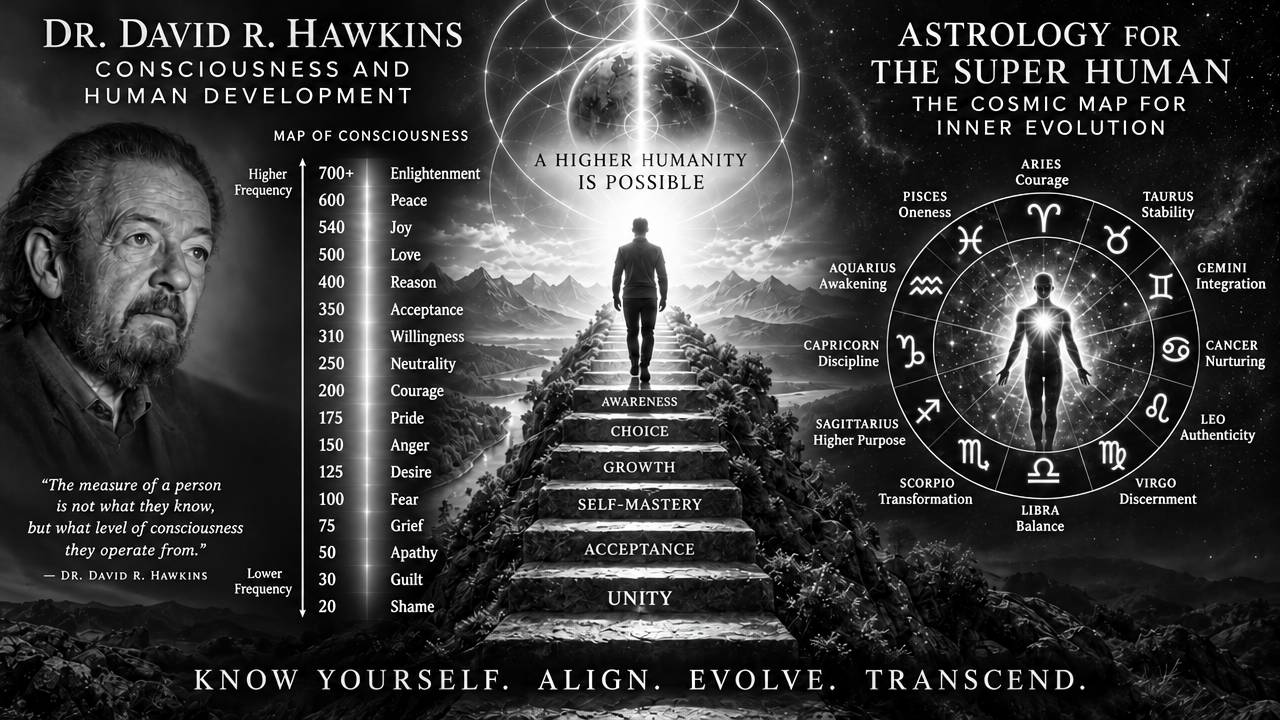
From there, a new paradigm is waiting to be understood, something that was known millennia ago and that Nikola Tesla also stated: “If you want to find the secrets of the universe, think in terms of energy, frequency and vibration.” The book I wrote in 2018, “Astrology for the 21st Century,” was an introduction to that. It was followed, in much deeper detail, by the book we wrote with my son Edward, “Astrology for the Super Human.”
We are under a new paradigm. AI provides access to information on astrology like the Library of Alexandria. Every person has at their fingertips the data from their natal chart to the rest of astrological knowledge. But that is just the beginning. The most important part is the correct use of that information; if it is not correctly applied, an immense opportunity for self-development goes to waste.
So AI is not only shaking the scientific world, but every realm of our existence.
If astrologers don’t shift from their previous understanding of astrology to the new information, it will be like a professor teaching what was learned 20 or 30 years ago, and we will have to wait for a new generation of professors who look at reality under the new paradigm.
AI is the most powerful tool humans have developed; let’s give it its proper use.

Leave a Reply